
Trees Removed Without Property Damage
Tree Removal & Tree Services in Annapolis for hazardous trees showing decay, structural failure, or storm damage
A tree leaning toward your house or showing fungal growth poses risks with each wind event until it fails. AXC Landscaping Services offers tree removal, trimming, and stump grinding in Annapolis for trees threatening structures or that have died. We provide safety evaluations to identify trees needing immediate action, protecting nearby landscaping and utilities.
Tree removal may involve directional felling or sectional dismantling near buildings. Trimming and pruning remove dead wood and enhance canopy shape. Stump grinding eliminates trunk remnants for new landscaping. Storm cleanup addresses broken limbs and uprooted trees.
Schedule a property evaluation to identify trees needing maintenance before severe weather strikes.
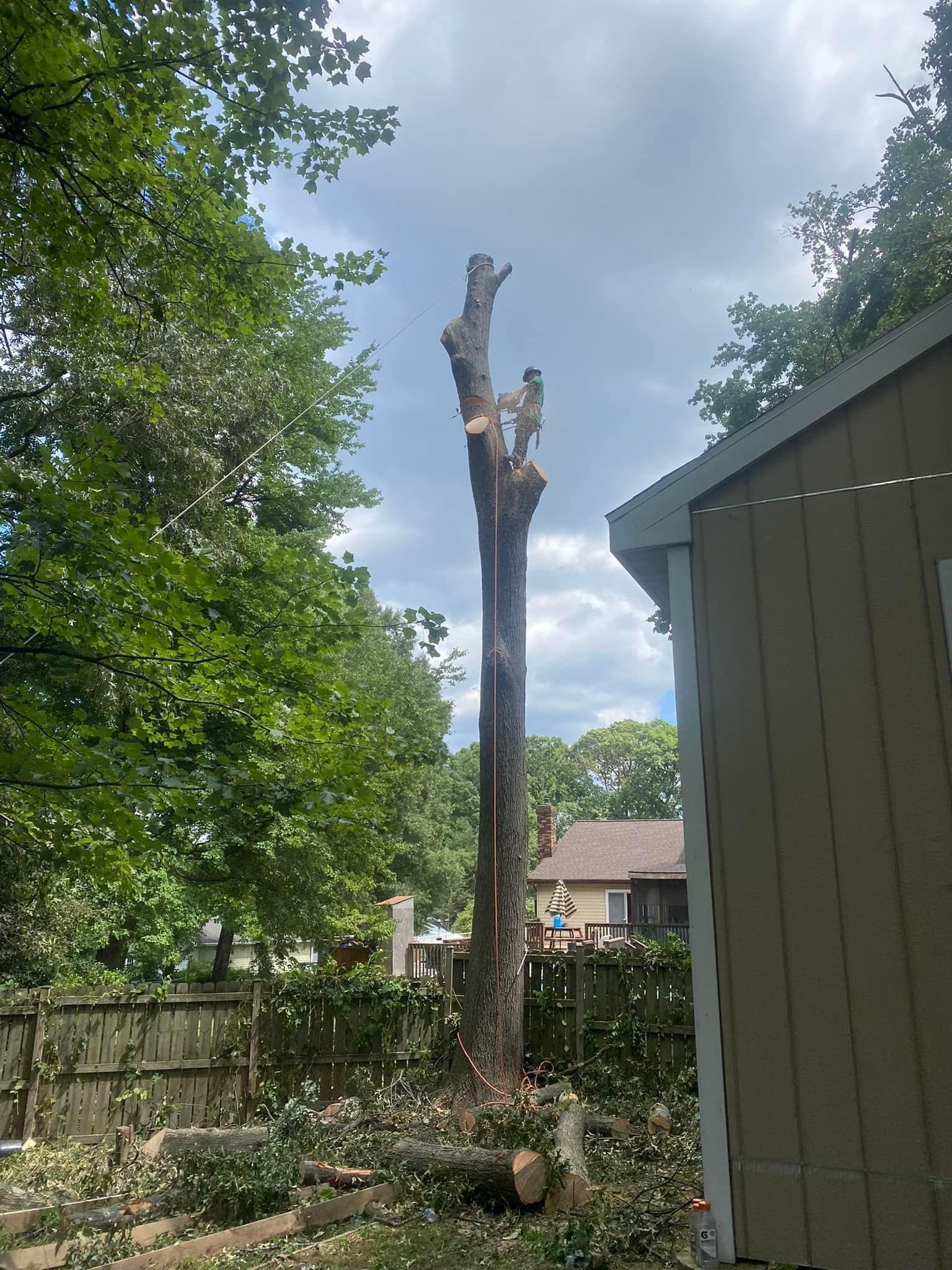
What Happens During Safe Tree Removal
Removal begins with assessing the site for rigging anchor points, access zones, and protection areas. Large trees are taken down in sections from the top, each lowered by rope to prevent ground impact. Smaller trees may be felled directionally if safe. Stump grinding follows, turning stumps into wood chips for new plantings.
After removal, your yard is clear of obstructions, allowing sunlight for healthier turf growth. Surrounding plants benefit from increased water and nutrients as tree roots are gone. AXC Landscaping Services disposes of all debris unless you choose to keep wood chips. The area is also cleaned of sawdust.
Dead tree removal addresses trees affected by disease, pests, or construction. Pruning can extend healthy trees' lives by removing crossing branches.
Answers to Tree Service Questions
Property owners facing tree removal decisions usually want to know about safety procedures, stump treatment options, and timing considerations.
What signs indicate a tree needs removal rather than pruning?
Fungal growth at the base signals internal decay, significant trunk lean suggests root failure, and large dead sections throughout the canopy indicate the tree is declining beyond recovery through pruning alone.
How is stump grinding depth determined for different future uses?
Grinding typically goes six to eight inches below grade for lawn restoration, but deeper grinding is needed if you plan to plant another tree in the same location to avoid root interference.
When should storm-damaged trees be removed after severe weather?
Immediate removal is necessary for trees blocking access or leaning on structures, while trees with broken limbs but stable trunks can be assessed within a few days to determine if pruning will restore structural integrity.
What happens to wood and debris after tree removal?
All material is hauled away and disposed of properly unless you request wood rounds for firewood or grinding chips for landscape use, which can be left on-site in a designated area.
How does tree removal near homes avoid damage to siding or roofing?
Sectional dismantling with rigging systems lowers each cut piece under control, preventing uncontrolled falling that could strike structures, while ground protection shields hardscapes and plant beds from equipment traffic.
AXC Landscaping Services evaluates tree health and structural stability to recommend removal, pruning, or ongoing monitoring based on what each specimen shows. Request a property assessment to identify trees that pose risk and determine the appropriate service response.